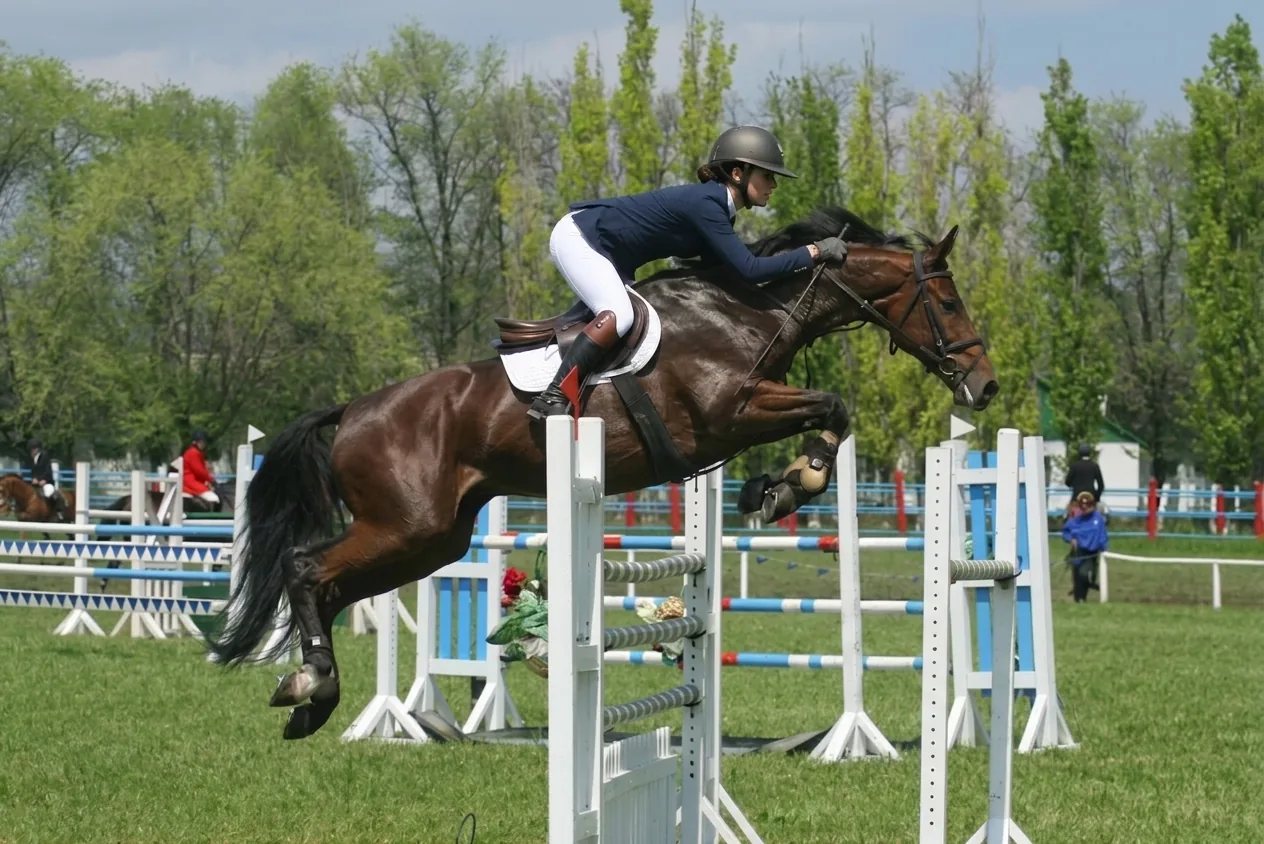
El motor financiero, la ciencia de la selección y la historia de la disciplina olímpica más dinámica del mundo.
The financial engine, the science of selection and the history of the world's most dynamic Olympic discipline.
Der Finanzmotor, die Wissenschaft der Selektion und die Geschichte der dynamischsten olympischen Disziplin der Welt.
El salto de obstáculos ecuestre no es únicamente la disciplina olímpica más seguida del mundo; es también el motor comercial y financiero más dinámico de toda la industria hípica global. Desde los pounding matches clandestinos de la Irlanda del siglo XVIII hasta los circuitos multimillonarios del Longines Global Champions Tour, la historia del salto es la de una disciplina que ha transformado la manera en que el caballo y el ser humano negocian, a 1,60 metros del suelo, los límites de lo posible.
Show jumping is not only the world's most followed Olympic equestrian discipline; it is also the most dynamic commercial and financial engine of the entire global horse industry. From the clandestine pounding matches of 18th-century Ireland to the multimillion-euro circuits of the Longines Global Champions Tour, the history of show jumping is that of a discipline that has transformed how horse and human negotiate, 1.60 metres above the ground, the limits of the possible.
Der Springsport ist nicht nur die meistverfolgte olympische Reitdisziplin der Welt, sondern auch der dynamischste kommerzielle und finanzielle Motor der gesamten globalen Pferdeindustrie. Von den heimlichen Pounding Matches im Irland des 18. Jahrhunderts bis zu den millionenschweren Zirkussen der Longines Global Champions Tour ist die Geschichte des Springsports die einer Disziplin, die neu definiert hat, wie Pferd und Mensch in 1,60 m Höhe die Grenzen des Möglichen ausloten.
La industria ecuestre internacional genera un impacto económico anual estimado en 300.000 millones de dólares y sostiene entre 1,6 y 2 millones de empleos a tiempo completo en todo el mundo. Dentro de este ecosistema, el salto de obstáculos ocupa la posición central: es la disciplina con mayor número de competidores registrados en la FEI, la que distribuye las bolsas de premios más cuantiosas y la que atrae el mayor volumen de inversión privada en cría deportiva.
El crecimiento financiero de la alta competición es ilustrativo. En 2005, los mejores jinetes competían en 45 eventos internacionales por un total de 6,6 millones de euros en premios. Hoy, el circuito de élite del Global Champions Tour organiza 17 eventos anuales con una bolsa que supera los 35 millones de euros — una sola jornada de la GCL Super Cup en Praga distribuyó más de 11,4 millones en un fin de semana.
Este capital eleva directamente el valor de los caballos de élite. Palloubet d'Halong, un Selle Français, se convirtió en el caballo de salto más caro de la historia al ser adquirido por unos 15 millones de dólares. Y la Premier Jumping League —programada para 2027 bajo el patrocinio de Frank McCourt, con 14 sedes y formato de 16 equipos— consolida una tendencia inequívoca: el salto capta el interés inversor de grandes fortunas con la misma lógica con que lo hicieron el fútbol o el tenis en décadas anteriores.
The international equestrian industry generates an estimated annual economic impact of 300 billion dollars and sustains between 1.6 and 2 million full-time jobs worldwide. Within this ecosystem, show jumping holds the central position: it is the discipline with the most FEI-registered competitors, the one that distributes the largest prize purses, and the one that attracts the highest volume of private investment in sport-horse breeding.
The financial growth of elite competition is telling. In 2005, the world's best riders competed in 45 international events for a total of 6.6 million euros in prize money. Today, the elite Global Champions Tour circuit stages 17 events a year with a purse exceeding 35 million euros — a single GCL Super Cup day in Prague distributed over 11.4 million in one weekend.
This capital directly raises the value of elite horses. Palloubet d'Halong, a Selle Français, became the most expensive jumping horse in history when acquired for an estimated 15 million dollars. And the Premier Jumping League — scheduled for 2027 under Frank McCourt's patronage, with 14 venues and a 16-team format — confirms an unmistakable trend: show jumping is attracting the investment of major fortunes with the same logic that football and tennis did in previous decades.
Die internationale Pferdeindustrie erwirtschaftet einen geschätzten jährlichen wirtschaftlichen Effekt von 300 Milliarden Dollar und sichert weltweit 1,6 bis 2 Millionen Vollzeitstellen. In diesem Ökosystem nimmt der Springsport die zentrale Position ein: die Disziplin mit den meisten FEI-registrierten Reitern, den höchsten Preisgeldern und dem größten Volumen privater Investitionen in die Sportpferdezucht.
Das finanzielle Wachstum des Spitzensports ist aufschlussreich. 2005 ritten die besten Reiter bei 45 internationalen Events um insgesamt 6,6 Millionen Euro. Heute organisiert der Elite-Zirkus der Global Champions Tour 17 Events pro Jahr mit einem Preisgeld von über 35 Millionen Euro.
Dieses Kapital steigert direkt den Wert der Spitzenpferde. Palloubet d'Halong, ein Selle Français, wurde für geschätzte 15 Millionen Dollar zum teuersten Springpferd der Geschichte. Die für 2027 geplante Premier Jumping League (Frank McCourt, 14 Austragungsorte, 16 Teams) bestätigt einen klaren Trend: Der Springsport zieht das Interesse großer Vermögen an.
| Región / PaísRegion / CountryRegion / Land | Impacto económico anualAnnual economic impactJährlicher Effekt | Población equinaEquine populationPferdebestand | EmpleoEmploymentBeschäftigung |
|---|---|---|---|
| Global | $300.000 M USD | 60 M | 1,6 – 2 M |
| EuropaEuropeEuropa | $133.000 M USD | 6,0 M | 400.000 |
| EE. UU.USAUSA | $122.000 M USD | 8,2 M | 1,7 M |
| EspañaSpainSpanien | €7.392 M EUR (0,59% PIB) | 722.158 | 149.863 |
| EAUUAEVAE | $2.400 M USD | — | En expansiónExpandingWachsend |
| ChinaChinaChina | $1.580 M USD | — | Inversión estatalState investmentStaatliche Investition |
La comparativa histórica de precios máximos ilustra la madurez del segmento: mientras Fusaichi Pegasus (carreras) alcanzó los 70 millones de dólares y Moorland's Totilas (doma) se vendió por hasta 21 millones, el salto ha alcanzado ya los 15 millones con Palloubet d'Halong. La convergencia de los tres mercados hacia valoraciones similares es una señal inequívoca de madurez financiera.
The historical comparison of record prices illustrates the segment's maturity: while Fusaichi Pegasus (racing) reached 70 million dollars and Moorland's Totilas (dressage) sold for up to 21 million, jumping has already reached 15 million with Palloubet d'Halong. The convergence of all three markets towards similar valuations is an unmistakable sign of financial maturity.
Der historische Vergleich der Rekordpreise zeigt die Reife des Segments: Während Fusaichi Pegasus (Rennsport) 70 Millionen Dollar erreichte und Totilas (Dressur) für bis zu 21 Millionen verkauft wurde, hat der Springsport mit Palloubet d'Halong bereits 15 Millionen erreicht — ein klares Zeichen finanzieller Reife.
El salto es la disciplina con mayor número de licencias dentro de la Federación Ecuestre Internacional (FEI), que agrupa a 136 federaciones nacionales. El censo global acumula 506.116 caballos y 203.468 competidores activos, con flujos de renovación muy estables que evidencian la madurez del ecosistema.
La demografía atraviesa dos transformaciones de calado. La primera es la feminización de la base: históricamente ligado a los estamentos militares, el deporte ecuestre moderno exhibe hoy una mayoría femenina abrumadora. Los datos de la Federación Alemana (FN) para 2025 confirman que solo el 11% de las licencias de competición corresponden a jinetes masculinos, frente al 20% de dos décadas atrás.
La segunda es la optimización del deporte federado. En Alemania, los concursos nacionales de salto cayeron de 3.500 a 3.138 anuales, pero las participaciones en pista se estabilizaron en 1.078.453: se hace menos, pero mejor cubierto y optimizado.
Show jumping has the most licences within the International Equestrian Federation (FEI), which gathers 136 national federations. The global census totals 506,116 horses and 203,468 active competitors, with very stable renewal flows that show the maturity of the ecosystem.
Two structural shifts stand out. The first is the feminisation of the grassroots: historically tied to military circles, modern equestrian sport now shows an overwhelming female majority. German Federation (FN) data for 2025 confirm that only 11% of competition licences belong to male riders, down from 20% two decades ago.
The second is the optimisation of organised sport. In Germany, national jumping shows fell from 3,500 to 3,138 a year, yet ring participations stabilised at 1,078,453: less is staged, but better attended and more efficient.
Der Springsport hat die meisten Lizenzen innerhalb des Weltreiterverbands (FEI), der 136 nationale Verbände umfasst. Die globale Statistik zählt 506.116 Pferde und 203.468 aktive Reiter — mit sehr stabilen Erneuerungsraten, die die Reife des Systems belegen.
Zwei strukturelle Veränderungen stechen hervor. Die erste ist die Feminisierung der Basis: Laut Daten der Deutschen Reiterlichen Vereinigung (FN) von 2025 entfallen nur noch 11% der Wettkampflizenzen auf männliche Reiter, gegenüber 20% vor zwei Jahrzehnten.
Die zweite ist die Optimierung des organisierten Sports. In Deutschland sanken die nationalen Springturniere von 3.500 auf 3.138 pro Jahr, doch die Starts stabilisierten sich bei 1.078.453: weniger Turniere, aber besser besucht und effizienter.
«La práctica ecuestre aporta 1.200 millones de libras anuales en valor social al Reino Unido, impactando en salud física, bienestar mental y desarrollo comunitario.» "Equestrian activity contributes 1.2 billion pounds a year in social value to the United Kingdom, impacting physical health, mental wellbeing and community development." „Der Reitsport trägt jährlich 1,2 Milliarden Pfund an sozialem Wert für das Vereinigte Königreich bei — für körperliche Gesundheit, mentales Wohlbefinden und Gemeinschaft." British Equestrian · The Power of Horses, 2024
En el salto moderno, las razas de líneas cerradas han sido reemplazadas casi por completo por poblaciones de caballos de sangre templada (warmbloods) criados bajo esquemas de libro abierto orientados al rendimiento. El éxito ya no se mide por la pureza de la sangre, sino por la capacidad funcional demostrada sobre vallas de más de 1,45 metros.
El análisis estadístico revela patrones precisos. El KWPN es la raza más representada en la alta competición mundial (19,26% de la población). Por sexos, los castrados son el grupo más numeroso (43,98%), aunque los sementales aprobados obtienen una puntuación de rendimiento superior —117,84 puntos frente a 105,76 de los castrados y 104,66 de las yeguas—, reflejo de la estricta selección a la que son sometidos.
In modern jumping, closed-line breeds have been almost entirely replaced by warmblood populations bred under performance-oriented open-book schemes. Success is no longer measured by purity of blood, but by functional ability demonstrated over fences above 1.45 metres.
Statistical analysis reveals precise patterns. The KWPN is the most represented breed in elite world competition (19.26% of the population). By sex, geldings are the largest group (43.98%), yet approved stallions achieve a higher performance score — 117.84 points versus 105.76 for geldings and 104.66 for mares — reflecting the strict selection they undergo.
Im modernen Springsport wurden geschlossene Rassen fast vollständig durch Warmblutpopulationen ersetzt, die nach leistungsorientierten Open-Book-Systemen gezüchtet werden. Erfolg misst sich nicht mehr an der Reinheit des Blutes, sondern an der funktionalen Leistung über Hindernissen von mehr als 1,45 m.
Die Statistik zeigt klare Muster. Das KWPN ist die am stärksten vertretene Rasse im Weltspitzensport (19,26%). Nach Geschlecht sind Wallache die größte Gruppe (43,98%), doch gekörte Hengste erreichen höhere Leistungswerte — 117,84 Punkte gegenüber 105,76 bei Wallachen und 104,66 bei Stuten.
La proporción media de sangre Purasangre Inglés en los pedigríes de los mejores caballos de salto se sitúa en el 41,61%. Los ejemplares con un porcentaje intermedio (30,1% – 70,0%) obtienen resultados significativamente superiores. El Thoroughbred aporta agilidad, velocidad de reacción, resistencia y valentía: cualidades que ningún programa de sangre fría ha logrado replicar.
The average proportion of Thoroughbred blood in the pedigrees of the best jumping horses stands at 41.61%. Horses with an intermediate percentage (30.1%–70.0%) achieve significantly superior results. The Thoroughbred contributes agility, reaction speed, stamina and courage: qualities no cold-blood programme has managed to replicate.
Der durchschnittliche Vollblutanteil in den Pedigrees der besten Springpferde liegt bei 41,61%. Pferde mit einem mittleren Anteil (30,1%–70,0%) erzielen deutlich bessere Ergebnisse. Das Vollblut bringt Agilität, Reaktionsschnelligkeit, Ausdauer und Mut.
Otro factor decisivo es la edad de máximo rendimiento. Un caballo de salto alcanza la madurez física y mental entre los 10 y los 13 años (media de 124,71 puntos en los rankings internacionales), superando con claridad a los caballos jóvenes en desarrollo (76,66) y a los veteranos de más de 14 años (109,29). Esta curva explica la lógica económica de los programas de young horse.
Another decisive factor is the peak performance age. A jumping horse reaches physical and mental maturity between 10 and 13 years (an average of 124.71 points in international rankings), clearly outperforming young horses in development (76.66) and veterans over 14 (109.29). This curve explains the economic logic of young-horse programmes.
Ein weiterer entscheidender Faktor ist das Alter der Höchstleistung. Ein Springpferd erreicht die Reife zwischen 10 und 13 Jahren (Durchschnitt 124,71 Punkte) und übertrifft junge Pferde in der Entwicklung (76,66) sowie Veteranen über 14 Jahren (109,29) deutlich.
La World Breeding Federation for Sport Horses (WBFSH) publica mensualmente, junto a la FEI, la clasificación oficial de los libros genealógicos, calculada con los puntos de los seis mejores caballos de cada asociación en concursos válidos. La clasificación 2025 confirma el dominio de Europa occidental.
The World Breeding Federation for Sport Horses (WBFSH) publishes, together with the FEI, the official ranking of studbooks, calculated from the points of each association's six best horses in valid events. The 2025 ranking confirms Western Europe's dominance.
Die World Breeding Federation for Sport Horses (WBFSH) veröffentlicht gemeinsam mit der FEI das offizielle Zuchtbuch-Ranking, berechnet aus den Punkten der sechs besten Pferde jedes Verbands. Das Ranking 2025 bestätigt die Dominanz Westeuropas.
| Rk. | Studbook / RazaStudbook / BreedZuchtbuch / Rasse | Pts. WBFSH | Semental líderLeading sireFührender Hengst |
|---|---|---|---|
| 1° | Selle Français (SF) | 9.046 | Cornet Obolensky |
| 2° | Holsteiner (HOLST) | 7.960 | Kannan |
| 3° | Royal Dutch Sport Horse (KWPN) | 7.889 | Chacco-Blue |
| 4° | Belgian Warmblood (BWP) | 7.550 | Diamant de Semilly |
| 5° | Oldenburger Int. (OS) | 7.345 | Mylord Carthago HN |
Detrás de estos cinco studbooks hay un grupo reducido de sementales de influencia determinante. Cornet Obolensky lidera el ranking de sementales WBFSH 2025 con 30.705 puntos, seguido de Kannan (30.364) y Chacco-Blue (25.931). Estos padres no solo transmiten fuerza y alcance: determinan la predisposición al trabajo y la estabilidad temperamental, las variables que más definen el rendimiento bajo presión.
Behind these five studbooks lies a small group of stallions of decisive influence. Cornet Obolensky tops the 2025 WBFSH sire ranking with 30,705 points, followed by Kannan (30,364) and Chacco-Blue (25,931). These sires transmit not only power and scope but also willingness and temperamental stability — the variables that most define performance under pressure.
Hinter diesen fünf Zuchtbüchern steht eine kleine Gruppe prägender Hengste. Cornet Obolensky führt das WBFSH-Hengstranking 2025 mit 30.705 Punkten an, gefolgt von Kannan (30.364) und Chacco-Blue (25.931). Diese Vererber übertragen nicht nur Kraft und Vermögen, sondern auch Arbeitswilligkeit und Nervenstärke.
Saltar obstáculos de forma competitiva es un fenómeno moderno —no antes de la segunda mitad del siglo XVIII— y su origen no es épico ni aristocrático: es el producto directo de una decisión parlamentaria sobre el uso del suelo. Las Leyes de Cercamiento británicas obligaron a vallar las propiedades con setos, zanjas y muros. Para mantener el ritmo de la caza del zorro, los caballos debían aprender a superar esas barreras. Así nacieron los primeros hunters.
En Irlanda, la necesidad derivó en los pounding matches del siglo XVIII: duelos de resistencia campo a través. El Parlamento los prohibió en 1739, pero continuaron clandestinos. De ellos surgió la primera competición documentada (Condado de Cork, 1752): 4,5 millas de iglesia a iglesia. El nombre de aquella modalidad —steeplechase, carrera hacia la aguja de la iglesia— sigue vigente.
Competitive jumping is a modern phenomenon — not before the second half of the 18th century — and its origin is neither epic nor aristocratic: it is the direct product of a parliamentary decision on land use. The British Enclosure Acts forced landowners to fence properties with hedges, ditches and walls. To keep pace with fox hunting, horses had to learn to clear those barriers. So the first hunters were born.
In Ireland, this need gave rise to the 18th-century pounding matches: cross-country endurance duels. Parliament banned them in 1739, but they continued clandestinely. From them came the first documented race (County Cork, 1752): 4.5 miles from church to church. The name of that format — steeplechase, a race towards the church steeple — remains in use today.
Der Wettkampf-Springsport ist ein modernes Phänomen — nicht vor der zweiten Hälfte des 18. Jahrhunderts — und sein Ursprung ist weder episch noch aristokratisch: Er ist das direkte Produkt einer parlamentarischen Entscheidung zur Landnutzung. Die britischen Enclosure Acts zwangen zur Einzäunung mit Hecken, Gräben und Mauern. Um mit der Fuchsjagd Schritt zu halten, mussten Pferde diese Hindernisse überwinden. So entstanden die ersten Hunter.
In Irland führte dies zu den Pounding Matches des 18. Jahrhunderts. Das Parlament verbot sie 1739, doch sie wurden heimlich fortgesetzt. Aus ihnen entstand das erste dokumentierte Rennen (County Cork, 1752): 4,5 Meilen von Kirche zu Kirche. Der Name — Steeplechase — ist bis heute gebräuchlich.
La técnica vigente hasta finales del siglo XIX era biomecánicamente perjudicial: los jinetes forzaban la cabeza del caballo hacia arriba con riendas tensas y, al despegar, echaban el torso hacia atrás cargando su peso sobre los lomos. El resultado: bloqueo de la parábola natural del salto (bascule), dolor crónico de dorso y elevada tasa de rehúses. No era equitación; era una lucha contra la biomecánica del caballo.
The technique in use until the late 19th century was biomechanically harmful: riders forced the horse's head up with tight reins and, on take-off, threw their torso back, loading their weight onto the horse's loins. The result: blocking of the jump's natural arc (bascule), chronic back pain and a high refusal rate. It was not riding; it was a fight against the horse's biomechanics.
Die bis zum späten 19. Jahrhundert übliche Technik war biomechanisch schädlich: Reiter zwangen den Kopf mit straffen Zügeln hoch und warfen beim Absprung den Oberkörper zurück, mit dem Gewicht auf den Lenden. Das Ergebnis: Blockade des natürlichen Sprungbogens (Bascule), chronische Rückenschmerzen und hohe Verweigerungsraten.
La transformación llegó con el Capitán Federico Caprilli (1868–1907), oficial italiano de la Escuela de Pinerolo. Fotografió caballos saltando en libertad y confirmó que el caballo extiende el cuello hacia delante para equilibrarse. Su Sistema de Equitación Natural —el «Asiento Adelantado»— propone estribos cortos, torso inclinado hacia delante y manos que ceden hacia la boca en la fase de vuelo. En 1902 estableció un récord mundial de altura de 2,08 m sobre Sfacciato.
The transformation came with Captain Federico Caprilli (1868–1907), an Italian officer at the Pinerolo School. He photographed horses jumping at liberty and confirmed that the horse stretches its neck forward to balance. His Natural Riding System — the "forward seat" — calls for short stirrups, a forward-inclined torso and hands that yield towards the mouth in flight. In 1902 he set a world high-jump record of 2.08 m on Sfacciato.
Die Wende kam mit Hauptmann Federico Caprilli (1868–1907), italienischer Offizier der Schule von Pinerolo. Er fotografierte frei springende Pferde und bestätigte, dass das Pferd den Hals nach vorne streckt, um die Balance zu halten. Sein natürliches Reitsystem — der „leichte Sitz" — fordert kurze Bügel, vorgeneigten Oberkörper und nachgebende Hände. 1902 stellte er mit Sfacciato einen Hochsprung-Weltrekord von 2,08 m auf.
«La primera regla de la equitación es simplificar y, de ser posible, eliminar la intervención del jinete, para permitir que el caballo mantenga su equilibrio natural.» "The first rule of riding is to simplify and, if possible, eliminate the rider's intervention, so the horse can maintain its natural balance." „Die erste Regel des Reitens ist es, das Eingreifen des Reiters zu vereinfachen und möglichst zu eliminieren, damit das Pferd sein natürliches Gleichgewicht behält." Federico Caprilli · Pinerolo, c. 1901
En un ecosistema donde la genética de élite, la edad de madurez y el linaje del semental determinan el rendimiento sobre los 1,60 metros, encontrar el caballo adecuado deja de ser cuestión de suerte para convertirse en una decisión técnica. Ahí es donde entra Golden Horses Spain: ponemos a tu disposición el conocimiento del mercado, el acceso a ejemplares que nunca llegan a los portales públicos y una evaluación rigurosa —morfológica, biomecánica y veterinaria— para que adquieras, con total transparencia y sin conflicto de interés, el caballo de salto que necesitas para competir al nivel que te propongas. Desde la identificación del ejemplar hasta su llegada a tus instalaciones, nos ocupamos de todo.
In an ecosystem where elite genetics, maturity age and sire lineage determine performance over 1.60 metres, finding the right horse ceases to be a matter of luck and becomes a technical decision. That is where Golden Horses Spain comes in: we offer you market knowledge, access to horses that never reach the public portals, and a rigorous assessment — morphological, biomechanical and veterinary — so that you acquire, with full transparency and no conflict of interest, the jumping horse you need to compete at any level you set yourself. From identifying the horse to its arrival at your premises, we handle everything.
In einem Ökosystem, in dem Spitzengenetik, Reifealter und Hengstabstammung die Leistung über 1,60 m bestimmen, wird das Finden des richtigen Pferdes vom Glücksspiel zur technischen Entscheidung. Genau hier kommt Golden Horses Spain ins Spiel: Wir bieten Ihnen Marktkenntnis, Zugang zu Pferden, die nie auf öffentliche Portale gelangen, und eine rigorose Beurteilung — morphologisch, biomechanisch und tierärztlich —, damit Sie mit voller Transparenz und ohne Interessenkonflikt das Springpferd erwerben, das Sie für jedes Niveau brauchen. Von der Auswahl bis zur Ankunft bei Ihnen kümmern wir uns um alles.
En Golden Horses Spain trabajamos en exclusiva para el comprador. Accedemos a caballos de salto que no están en el mercado abierto — seleccionados con criterio, evaluados con rigor y adquiridos con total transparencia. Desde la identificación del ejemplar hasta la entrega en destino, nos ocupamos de cada detalle del proceso llave en mano, compitas al nivel que compitas y estés donde estés en el mundo.
At Golden Horses Spain we work exclusively for the buyer. We access jumping horses that are not on the open market — selected with expertise, evaluated with rigour and acquired with full transparency. From identifying the horse to delivery at destination, we handle every detail of the turnkey process, whatever level you compete at and wherever you are in the world.
Bei Golden Horses Spain arbeiten wir ausschließlich für den Käufer. Wir haben Zugang zu Springpferden, die nicht auf dem freien Markt sind — ausgewählt mit Sachverstand, bewertet mit Sorgfalt und mit voller Transparenz erworben. Von der Auswahl bis zur Lieferung kümmern wir uns um jedes Detail.
Fuentes: Equerry Co. · WOAH/FEI Data 2024 · Yeguada Cartuja / MAGRAMA 2023 · British Equestrian (The Power of Horses, 2024) · ResearchGate 2021 (Thoroughbred influence) · WBFSH World Ranking — Jumping Studbooks & Sires 2025 · SporthorseData · Practical Horseman (Caprilli) · FEI Annual Report 2024. Los datos reflejan la información verificada más reciente en el momento de publicación.
Sources: Equerry Co. · WOAH/FEI Data 2024 · Yeguada Cartuja / MAGRAMA 2023 · British Equestrian (The Power of Horses, 2024) · ResearchGate 2021 (Thoroughbred influence) · WBFSH World Ranking — Jumping Studbooks & Sires 2025 · SporthorseData · Practical Horseman (Caprilli) · FEI Annual Report 2024. Data reflects the most recent verified information available at time of publication.
Quellen: Equerry Co. · WOAH/FEI 2024 · Yeguada Cartuja / MAGRAMA 2023 · British Equestrian 2024 · ResearchGate 2021 · WBFSH World Ranking 2025 · SporthorseData · Practical Horseman · FEI Annual Report 2024. Die Daten entsprechen den aktuellsten verifizierten Informationen zum Zeitpunkt der Veröffentlichung.